WordPress powers over 40% of the web due to its intuitive editorial interface, vast plugin ecosystem, and familiar content authoring tools.
However, traditional monolithic WordPress—where the PHP backend handles database queries, templating, and HTML rendering on every request—often struggles with plugin bloat, sluggish Time to First Byte (TTFB), and continuous security vulnerabilities.
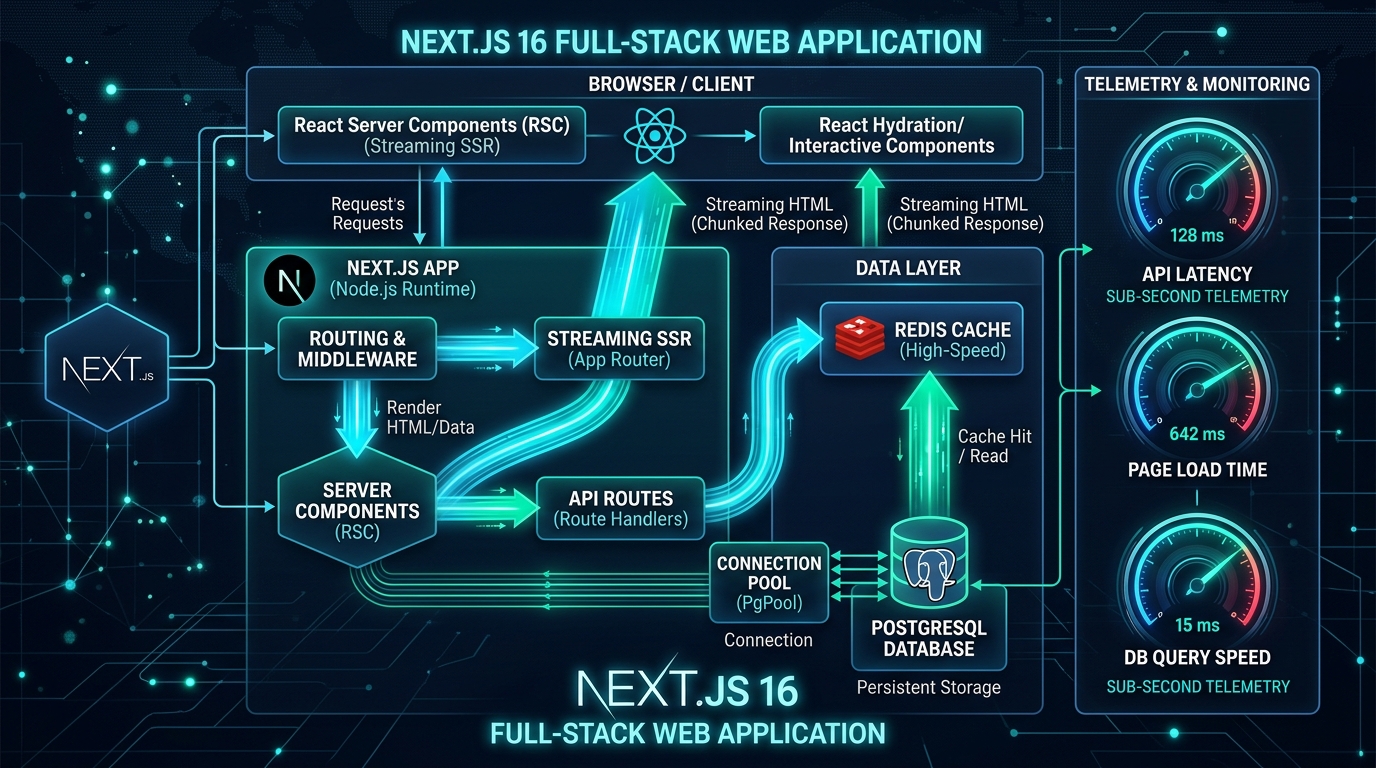
Headless WordPress decouples the platform: content editors keep the familiar WordPress Gutenberg admin, while developers build a blazing-fast, secure front-end using Next.js and React.
Traditional Monolithic WordPress:
User Request ──► Apache/Nginx ──► PHP Engine ──► MySQL DB ──► Slow Server HTML

Headless WordPress with Next.js:
User Request ──► Global Edge CDN (Pre-rendered Static HTML) ──► Instant 100/100 Core Web Vitals
                  ▲
                  │ (On Content Publish via Webhook)
WordPress Admin ──► WPGraphQL API ──► Next.js ISR Build
| Factor | Traditional Monolithic WordPress | Headless WordPress (Next.js) |
|---|
| Page Speed & Core Web Vitals | 45–80 Lighthouse score (Heavy CSS/JS bloat) | 98–100 Lighthouse score (Sub-500ms global edge delivery) | |
| Security Surface Area | Vulnerable to PHP exploits & plugin vulnerabilities | Backend is completely hidden behind API firewall; zero public PHP execution | |
| Content Authoring Experience | Familiar Gutenberg editor | Identical WordPress Gutenberg editor for marketing team | |
| Hosting Complexity | Single Apache/Nginx shared or VPS host | Decoupled hosting (WP backend on VPS + frontend on Vercel/Cloudflare) | |
| Initial Build Investment | Lower upfront cost | Higher initial engineering investment | |
- Choose Traditional WordPress if you have a modest content site with limited traffic, standard layout requirements, and an editorial team that installs plugins independently.
- Choose Headless WordPress with Next.js if your website is a primary revenue driver where sub-second Core Web Vitals, enterprise security, and seamless integration with custom React web apps are mandatory.