Every growing business eventually reaches an inflection point where standard SaaS tools no longer fit their operational reality. You find yourself paying for 12 different software subscriptions, your team spends hours manually synchronizing data across tabs, and your core workflow is constrained by what someone else's product roadmap allows.
However, developing custom software is a significant capital commitment. Building when you should have bought wastes precious engineering velocity; buying when you should have built saddles your company with technical debt, per-seat licensing penalties, and inflexible operational ceilings.
This guide provides an objective, battle-tested decision framework to determine whether your business should Buy (Subscribe) or Build (Engineer).
The clearest mental model for software strategy is Geoffrey Moore's Core vs. Context framework:
                     HIGH COMPETITIVE ADVANTAGE
                                ▲
                                │
          STRATEGIC MOAT        │        DIFFERENTIATOR
     ┌──────────────────────────┼──────────────────────────┐
     │                          │                          │
     │  Proprietary Logistics   │  AI-Assisted Customer    │
     │  Algorithms & Portals    │  Scoring & Booking Flow  │
     │                          │                          │
     │     >>> BUILD <<<        │     >>> BUILD <<<        │
     │                          │                          │
─────┼──────────────────────────┼──────────────────────────┼─────► MISSION CRITICAL
     │                          │                          │
     │     Standard Payroll     │   Internal Team Chat     │
     │     & General Ledger     │   (Slack / Microsoft)    │
     │                          │                          │
     │     >>> BUY SaaS <<<     │     >>> BUY SaaS <<<     │
     │                          │                          │
     └──────────────────────────┼──────────────────────────┘
                                │
                                ▼
LOW COMPETITIVE ADVANTAGE- Context (Commodity): If a business function is necessary to operate but does not differentiate you from your competitors (e.g., payroll, corporate email, generic invoicing), always BUY off-the-shelf software.
- Core (Differentiator): If a business workflow directly creates your competitive advantage, unique customer experience, or proprietary operational margin, always BUILD and own the software asset.
A common mistake is comparing the monthly sticker price of a SaaS platform ($99/user/month) against the upfront capital cost of custom engineering ($25,000–$60,000).
Over a 3-year operational horizon, the real math looks very different:
| Cost Dimension | Off-The-Shelf SaaS (e.g. Enterprise Tier) | Bespoke Custom Software Asset |
|---|
| Year 1 Costs | $36,000 (30 seats @ $100/mo) + $15k setup/consulting | $45,000 upfront engineering + $1,800 AWS hosting | |
| Year 2 Costs | $60,000 (50 seats as team scales) + tier upcharges | $2,400 cloud hosting + $4,000 incremental feature tuning | |
| Year 3 Costs | $96,000 (80 seats) + enterprise add-ons | $3,000 cloud hosting + $5,000 maintenance | |
| 3-Year Total | $207,000+ (Perpetual liability with 0% equity) | $61,200 (100% owned intellectual property) | |
| Data Ownership | Vendor cloud (Subject to export limits & API caps) | 100% sovereign PostgreSQL database on your cloud | |
| Feature Control | Zero control; locked to vendor's product releases | Instant autonomy to add workflows that save your team hours | |
If you experience two or more of the following symptoms, buying off-the-shelf is actively costing your business money:
- The "Spreadsheet Middleware" Trap: Your team exports CSVs from one SaaS, massages the columns in Google Sheets or Excel, and manually uploads them into another system daily.
- Per-Seat Growth Penalty: Every time you hire an operations contractor, warehouse worker, or customer rep, your software bills spike exponentially.
- API Rate Limiting & Throttling: Third-party SaaS tools block your automated volume spikes or charge exorbitant fees for enterprise API access.
- Compliance & Data Sovereignty: Your clients require strict data isolation (HIPAA, SOC2, local jurisdiction residency) that generic multi-tenant SaaS cannot guarantee.
Do NOT build custom software if:
- Your process is immature and changes every two weeks (use no-code/spreadsheets until your workflow stabilizes).
- Excellent turnkey solutions exist with open APIs (e.g. Stripe for payments, Postmark for transactional email, Auth0/Clerk for identity).
- You lack an internal product owner to provide clear business requirements during the discovery phase.
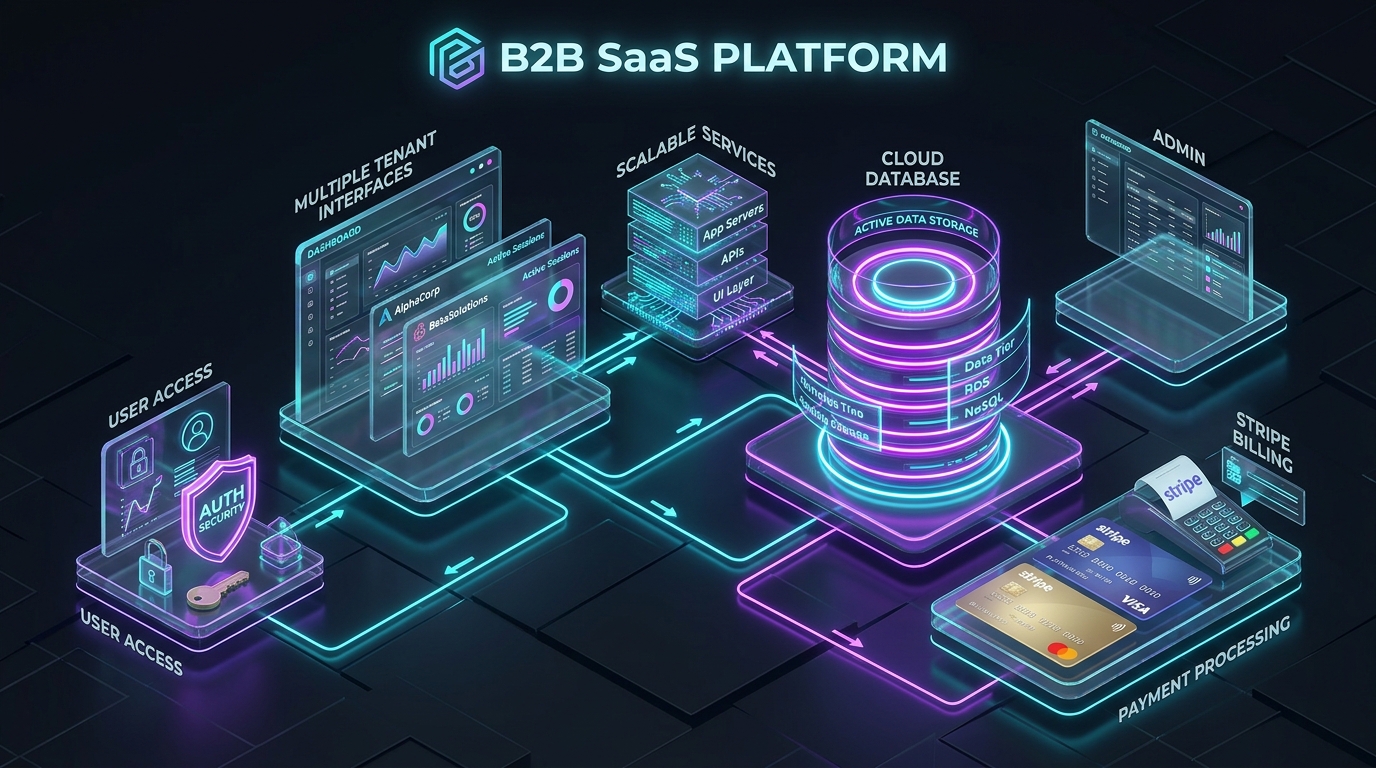
At CodexveTech, we advocate for the Composable Enterprise Architecture: Build custom code for your proprietary business logic and client-facing interfaces, while integrating battle-tested APIs for commodity services (e.g. Stripe, AWS S3, Twilio, OpenAI).
This delivers the speed and cost efficiency of off-the-shelf services with the sovereign power and competitive advantage of custom software.