In software engineering, a Minimum Viable Product (MVP) is not a broken, incomplete prototype. It is the leanest production-grade version of your software that delivers core value to paying customers while providing a scalable foundation for future iterations.
The greatest risk for early-stage SaaS founders is not building too slowly—it is building the wrong features with unmaintainable architecture, forcing a costly complete rewrite when the first 100 enterprise customers sign up.
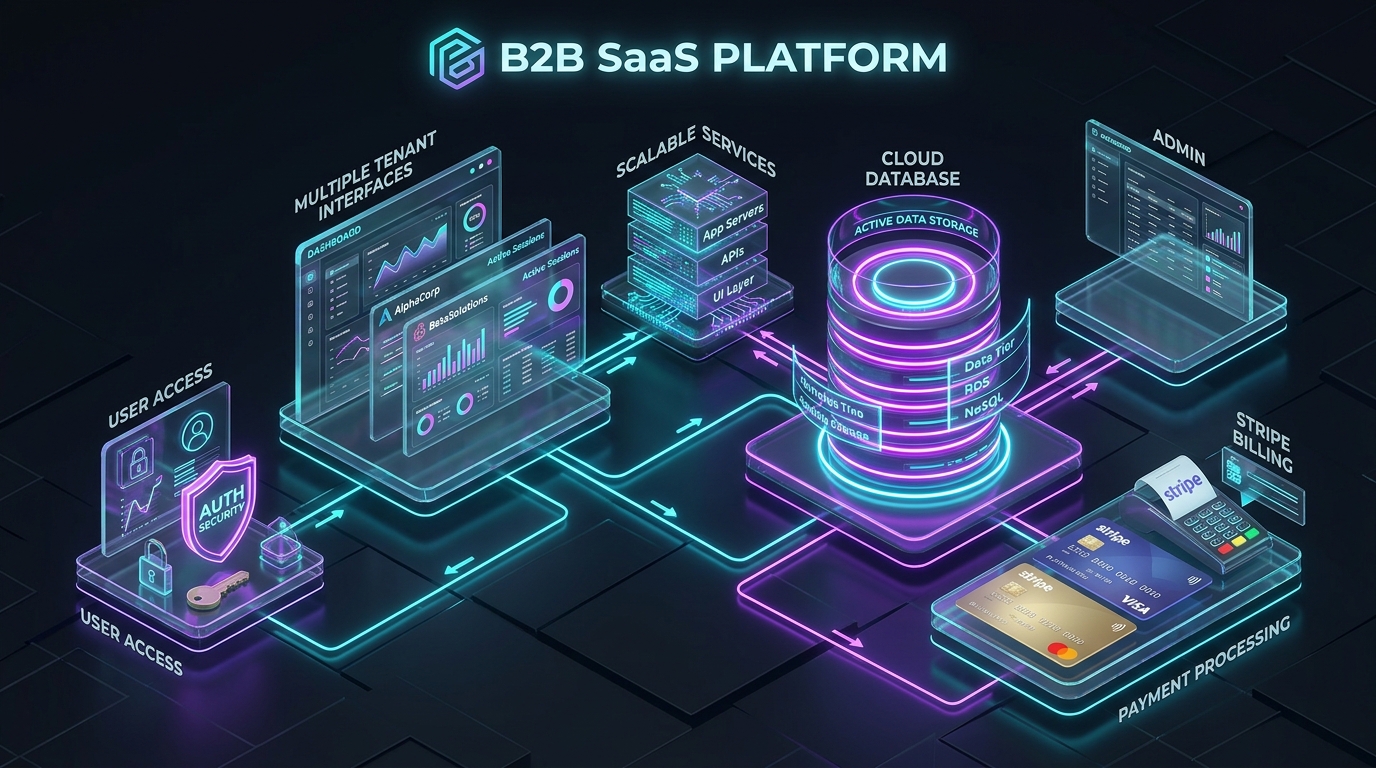
Every commercial B2B SaaS platform requires five non-negotiable architectural pillars before launching to public users:
┌─────────────────────────────────────────────────────────────┐
│                 Modern B2B SaaS Architecture                │
├─────────────────────────────────────────────────────────────┤
│  1. Multi-Tenant Data Isolation (PostgreSQL RLS / Schemas)  │
│  2. Authentication & Granular RBAC (Admin, Member, Viewer)  │
│  3. Automated Stripe Billing (Proration, Webhooks, Portal)   │
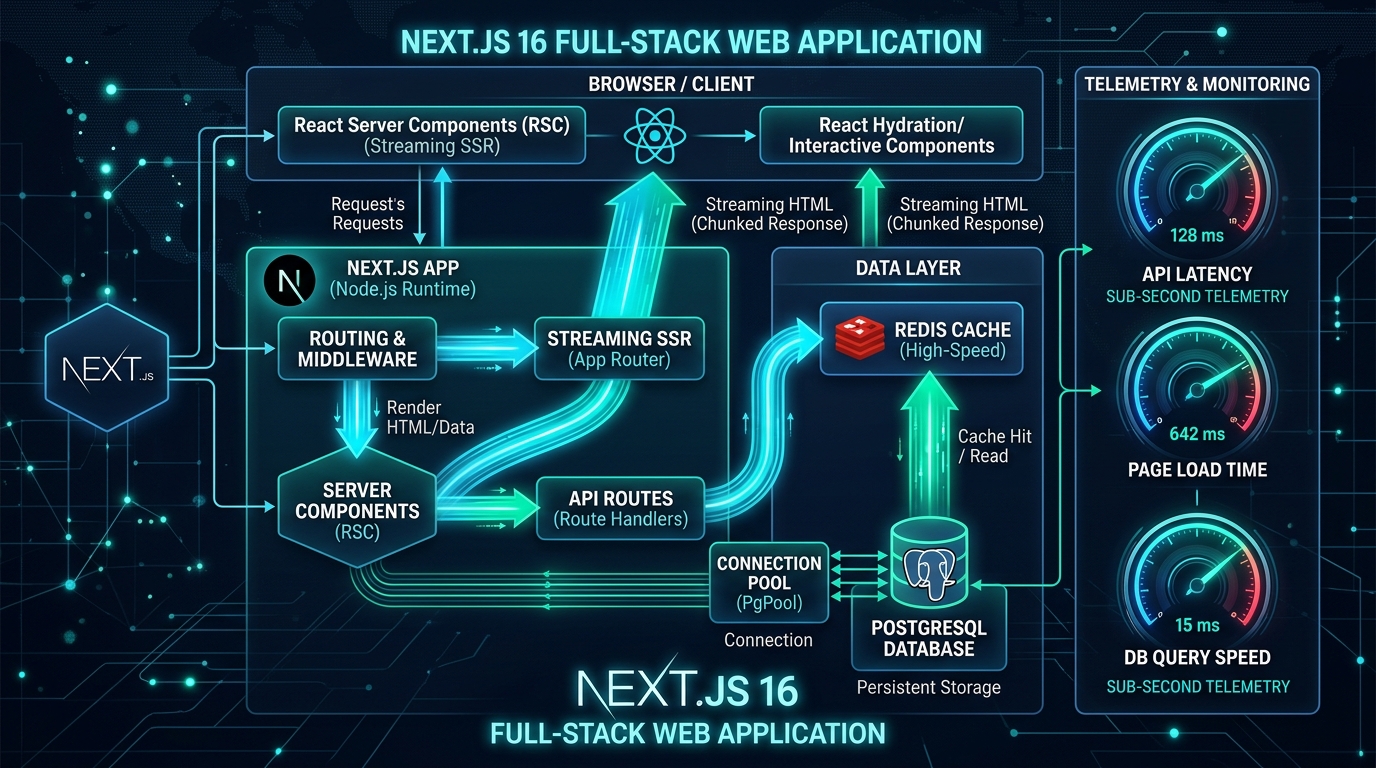
│  4. Fast Server-Side Rendered UI (Next.js App Router)       │
│  5. Background Async Workers (BullMQ / Inngest / Queues)     │
└─────────────────────────────────────────────────────────────┘
Designing a single-tenant database and attempting to convert it to multi-tenancy later is one of the most expensive refactors in software engineering. We enforce tenant boundaries at the database level using PostgreSQL Row-Level Security (RLS) or tenant ID partitioning.
-- PostgreSQL Row Level Security Policy for SaaS Multi-Tenancy
ALTER TABLE organization_documents ENABLE ROW LEVEL SECURITY;

CREATE POLICY tenant_isolation_policy ON organization_documents
  FOR ALL
USING (tenant_id = current_setting('app.current_tenant_id')::uuid);Never trust the client browser to confirm a paid subscription. Always provision customer workspaces asynchronously via signed Stripe webhooks:
// Resilient Stripe Subscription Webhook Handler
export async function handleStripeWebhook(event: Stripe.Event) {
  switch (event.type) {
    case "customer.subscription.created":
    case "customer.subscription.updated": {
      const subscription = event.data.object as Stripe.Subscription;
      await updateTenantSubscriptionStatus({
        customerId: subscription.customer as string,
        tier: subscription.items.data[0].price.id,
        status: subscription.status,
        currentPeriodEnd: new Date(subscription.current_period_end * 1000),
      });
      break;
    }
    case "invoice.payment_failed": {
      await flagTenantPastDue(event.data.object.customer as string);
      break;
    }
  }
}
To launch within 4 to 6 weeks, founders must be ruthless about feature prioritization:
| Must-Have in MVP Sprint (Weeks 1–6) | Postpone to Post-Launch Roadmap |
|---|
| Core proprietary problem-solving feature | Custom drag-and-drop workflow builders | |
| Self-serve Stripe checkout & billing portal | Enterprise SAML / Okta SSO (unless contractually required) | |
| Secure team invites & basic RBAC | Complex granular permission matrices per custom button | |
| Clean transactional emails (Resend / Postmark) | Full in-app marketing automation suite | |
| Automated database backups & audit logs | Multi-region active-active database replication | |
When we engineered the Multi-Tenant SaaS Billing Hub featured in our portfolio:
- The production MVP was built and deployed in 5 weeks using Next.js App Router, Prisma ORM, and PostgreSQL.
- Automated Stripe webhooks eliminated all manual subscription reconciliation.
- Edge middleware ensured sub-second tenant routing and zero data cross-contamination between enterprise clients.
Focus 80% of your MVP budget on the core proprietary feature that solves your customer's primary pain point. Rely on standard, proven engineering patterns for auth, billing, and infrastructure so you can launch fast and iterate based on real customer usage.