AI & Automation7 min read•Published March 15, 2026•Updated March 24, 2026
AI Automation for Growing Businesses: Where to Start and What to Avoid
A pragmatic engineering guide on identifying high-ROI operational bottlenecks, selecting between deterministic workflows and LLM reasoning, and avoiding expensive automation pitfalls.
Every week, business owners are bombarded with promises that "AI will run their entire company autonomously." In practice, unguided AI implementations often generate hallucinations, introduce brittle dependencies, and waste engineering capital.
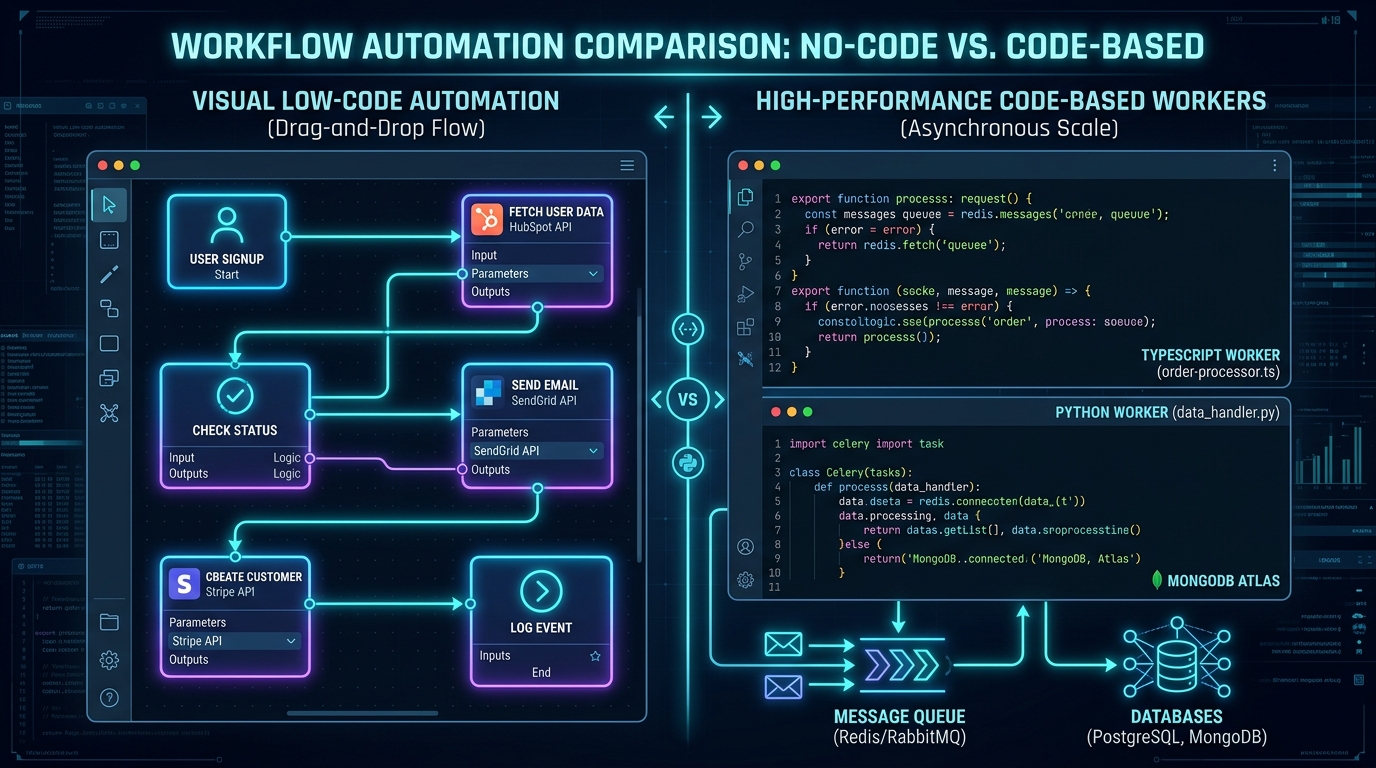
However, when applied to specific operational bottlenecks, AI workflow automation delivers measurable efficiency gains. The key is knowing exactly where cognitive reasoning is needed versus where traditional deterministic code is superior.
Never let an autonomous agent execute raw UPDATE or DELETE SQL statements directly. Always require the LLM to output a strictly validated JSON payload (using tools like Zod or Pydantic) which is then verified by a deterministic validation service.
Every automated extraction must compute a confidence score. If an extracted purchase order total has an ambiguity rating below 95%, route it to an Operator Review Dashboard rather than silently committing bad data.
Calling expensive frontier models on thousands of tiny webhook pings creates unsustainable monthly bills. Use smaller, optimized open models or targeted microservices for high-frequency classification tasks.
When an automated system updates inventory or modifies an invoice, you need an exact timestamped log of the original input, the AI prompt/response, and the resulting database payload.
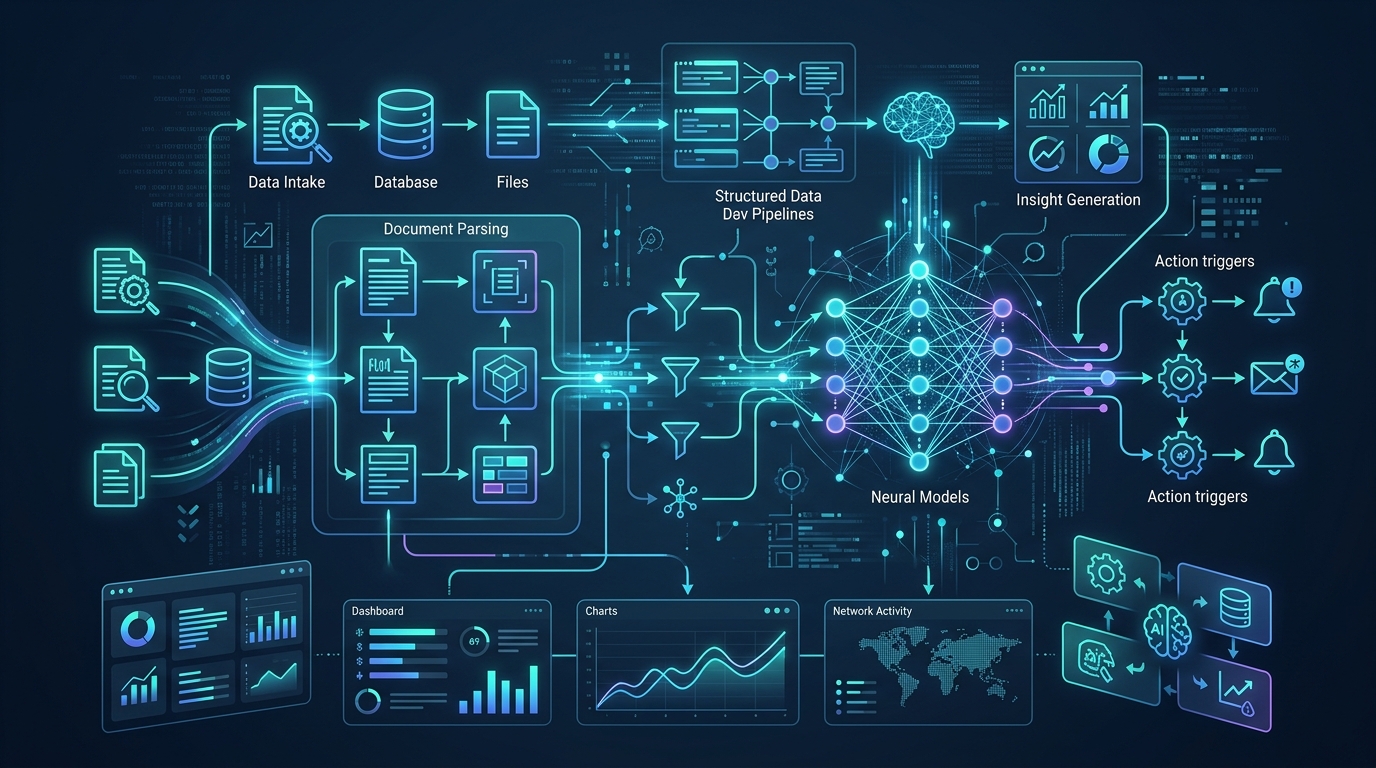
In our recent work engineering an automated B2B order pipeline for an international wholesale distributor, the client was spending over 18 hours per week manually re-keying PDF orders into their legacy ERP.
By architecting a resilient event-driven ingestion worker combining OCR, LLM schema normalization, and Redis BullMQ queues:
Transcription error rates plummeted from 4.2% to 0.08%.
Inbound order processing time dropped from 4 hours to 4 seconds.
Logistics managers only review the 1.5% of edge-case documents flagged by the exception queue.
Successful business automation does not require rebuilding your entire technology stack from scratch. Begin with one high-frequency operational bottleneck, establish strict validation guardrails, and expand once ROI is proven.
Frequently Asked Questions
What is the difference between traditional automation and AI workflow automation?
Traditional automation relies on strict conditional rules (if X happens, do Y). AI workflow automation adds cognitive capabilities like extracting messy PDF tables, summarizing context, classifying unstructured inquiries, and generating human-like draft responses before executing deterministic API actions.
How do businesses prevent AI hallucinations in automated pipelines?
By employing Retrieval-Augmented Generation (RAG) with verified internal documentation, strict JSON schema validation (e.g. Zod or Pydantic), confidence score thresholds, and human-in-the-loop exception queues for any operation with financial or regulatory impact.
Which business processes yield the fastest ROI with AI automation?
Document ingestion (invoices, bills of lading, purchase orders), customer support tier-1 triage, lead enrichment, and automated inventory sync across disparate platforms consistently produce positive ROI within 60 to 90 days.
Enjoyed this engineering guide? Share it with your team:
Share:
Y
Yasir Noor
Author
Lead Solutions Architect & Full-Stack Engineer
Full-stack software architect specializing in Next.js, Node.js, AI workflow automation, multi-tenant SaaS platforms, and enterprise web engineering at CodexveTech.
Related CodexveTech ServiceAI & Automation
Need Dedicated Engineering for AI Application Development?
Deploy domain-specific AI models, retrieval-augmented generation (RAG), and reasoning engines into your software.
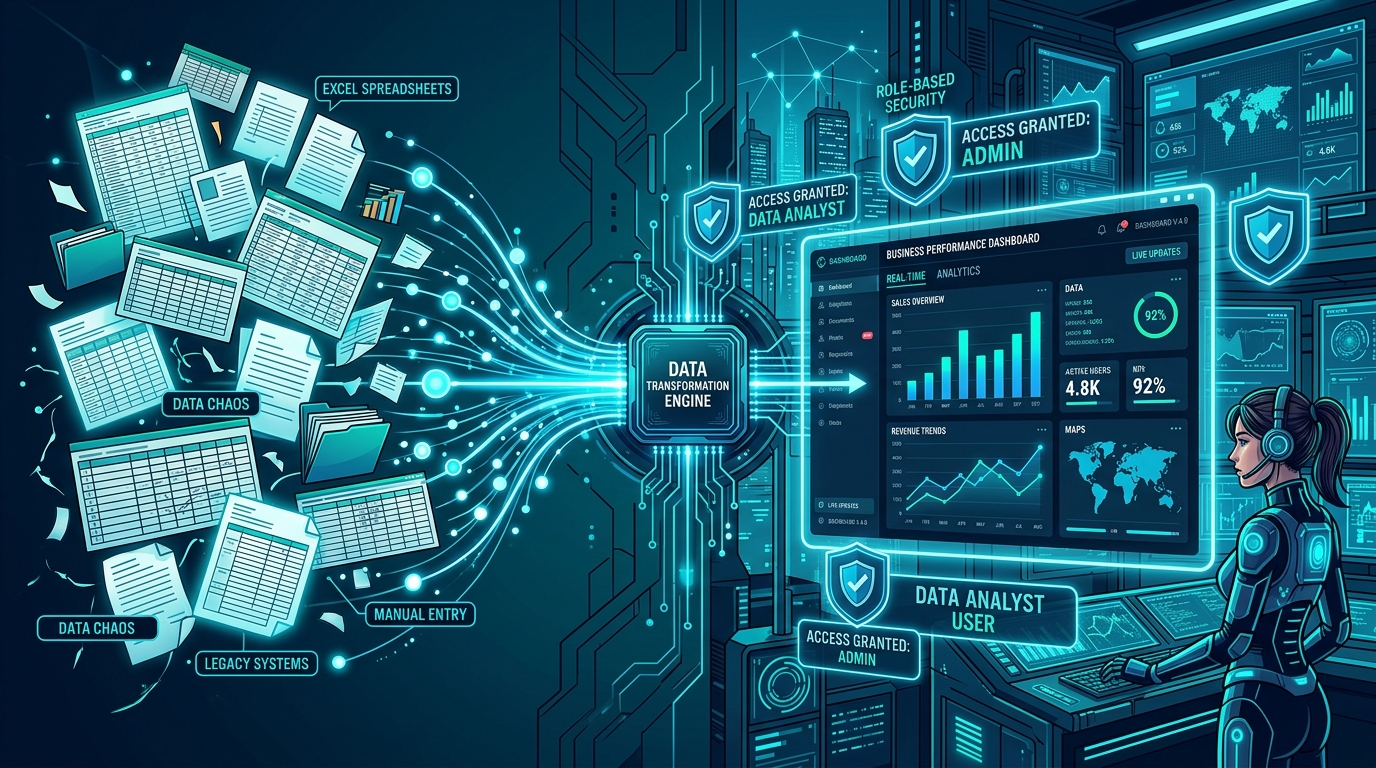
Why multi-million dollar operations stall on spreadsheet formulas, and how custom internal portals provide real-time visibility, role-based security, and automated workflows.